$1T Moved on Iran “Talks” — Did They Even Happen? | Prof G Markets
Audio Brief
Show transcript
This episode covers the financial markets struggle to price in unpredictable geopolitical statements and OpenAI strategic pivot toward enterprise solutions.
There are three key takeaways. First, markets must learn to ignore erratic political rhetoric and wait for concrete policy action. Second, winning the consumer AI race is a massive cash burn rather than a sustainable business model. Third, AI companies must aggressively pivot to enterprise monetization to survive and justify their valuations.
Financial markets are traditionally built to react to presidential statements. However, investors are currently facing a pattern of extreme political threats that are later walked back. This unpredictable strategy whipsaws the market and makes leadership rhetoric uninformative for economic forecasting.
The most rational response for investors is to filter out this noise. Rather than trading on initial rhetorical threats, investors should wait for actual legislation to protect their portfolios from unnecessary volatility. The stakes for the average household are simply too high to trade on erratic social media posts.
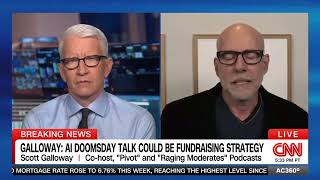
On the technology front, OpenAI faces a harsh reality regarding its business model. Despite capturing massive consumer mindshare with ChatGPT, serving free users costs the company massive amounts of compute and money. Unlike social media where users generate ad revenue, AI consumers are a heavy expense that must be subsidized.
To justify its massive valuation and prepare for a potential public offering, the company is shifting its focus heavily to enterprise and B2B solutions. This pivot forces OpenAI to play catch up with competitors like Anthropic whose models have already gained strong enterprise traction.
When evaluating the long term viability of AI companies, the focus must shift from consumer user growth to concrete enterprise monetization strategies. Building a profitable AI business requires delivering reliable tools for businesses rather than just popular consumer applications.
Ultimately, navigating today market requires ignoring political noise and looking strictly at hard fundamentals and clear paths to profitability.
Episode Overview
- This episode of Prof G Markets analyzes the financial market's struggle to price in unpredictable geopolitical statements from Donald Trump, specifically regarding the conflict with Iran.
- It explores OpenAI's strategic pivot away from consumer "side quests" to focus heavily on enterprise and B2B solutions in order to justify its massive valuation.
- The discussion highlights the stark difference between winning the consumer mindshare in AI and actually building a profitable, cash-flowing business.
- This content is highly relevant for investors trying to navigate politically driven market volatility and those tracking the commercialization trajectory of the AI industry.
Key Concepts
- The "Taco" Strategy of Political Volatility: The episode discusses a pattern where extreme political threats (like military action or tariffs) are made to spook markets, only to be walked back later. Markets are struggling to price this unpredictability, making these statements highly uninformative for actual economic forecasting and causing unnecessary market whipsawing.
- OpenAI's Enterprise Pivot: Despite having a massive consumer user base with ChatGPT, serving free users costs OpenAI massive amounts of money. To justify their valuation and prepare for a potential IPO, OpenAI must pivot to enterprise solutions (like coding assistants) to generate reliable free cash flow, essentially playing catch-up with competitors like Anthropic whose Claude model has gained strong enterprise traction.
- The Cost of Consumer AI: Winning the consumer AI race is fundamentally different from traditional tech consumer victories. Unlike social media where users generate ad revenue, AI consumers burn expensive compute, forcing AI labs to aggressively pursue B2B applications to subsidize their consumer success.
- Ignoring the Noise: Financial markets are traditionally built to react to presidential statements. However, when statements are consistently disconnected from actual policy follow-through, the most rational market response is to stop reacting to the rhetoric entirely.
Quotes
- At 5:55 - "I don't think we've ever been in a situation like this where the word of the president about what his intentions are is so uninformative about the future." - Highlights the core difficulty financial markets face in pricing geopolitical risk when leadership statements lack credibility.
- At 10:59 - "The stakes for the average... American household are thousands and plausibly tens of thousands of dollars." - Emphasizes the real-world economic impact that market volatility driven by erratic political statements has on everyday citizens.
- At 14:42 - "Now that OpenAI has won consumer... guess what? The vast majority of its users actually cost it money to serve." - Clarifies why winning the consumer AI race isn't enough to build a sustainable, profitable business and explains the urgent need for an enterprise pivot.
- At 26:50 - "If you want to stop losing money, it's quite simple... stop listening to the president." - Summarizes the ultimate conclusion for investors who are continually getting burned by trading on unreliable political rhetoric.
Takeaways
- Filter out extreme political noise when making immediate investment decisions; wait for concrete policy actions or legislation rather than trading on initial rhetorical threats.
- When evaluating the long-term viability of AI companies, scrutinize their enterprise monetization strategies and B2B product roadmaps rather than simply looking at their consumer user growth.
- Protect your portfolio from the "Taco" effect by recognizing that initial geopolitical threats made on social media or in press conferences are often negotiation tactics rather than absolute policy directives.